Fit guide · 4 minute read

7 signs your sneakers are too narrow

Most of us check the length of a shoe and never the width. Here’s how to tell in about a minute, and what to wear instead.

By All Ten · Updated October 2026

A narrow sneaker set on top of a pencil tracing of a bare foot; the tracing shows past the shoe at the toes and sides
The trace test: if the outline of your foot is wider than your shoe, your toes are paying for it.

Shoes are sold by length. Your foot is measured in two directions. In one survey, 79% of women said they never get their feet measured when they shop for shoes,2 so it’s easy to be in the wrong width for years without knowing it.

Read through the seven signs below and tap “This sounds like me” on the ones that fit. At the end we’ll tally them and point you to a pair.

  1. 1Your pinky toe takes the hit.
  2. 2Your toes can’t wiggle.
  3. 3Your foot is wider than your shoe.
  4. 4Your feet changed. Your shoe size didn’t.
  5. 5You size up, and your heel slips.
  6. 6Barefoot shoes freed your toes. Your heels disagreed.
  7. 7Your feet are done before your day is.
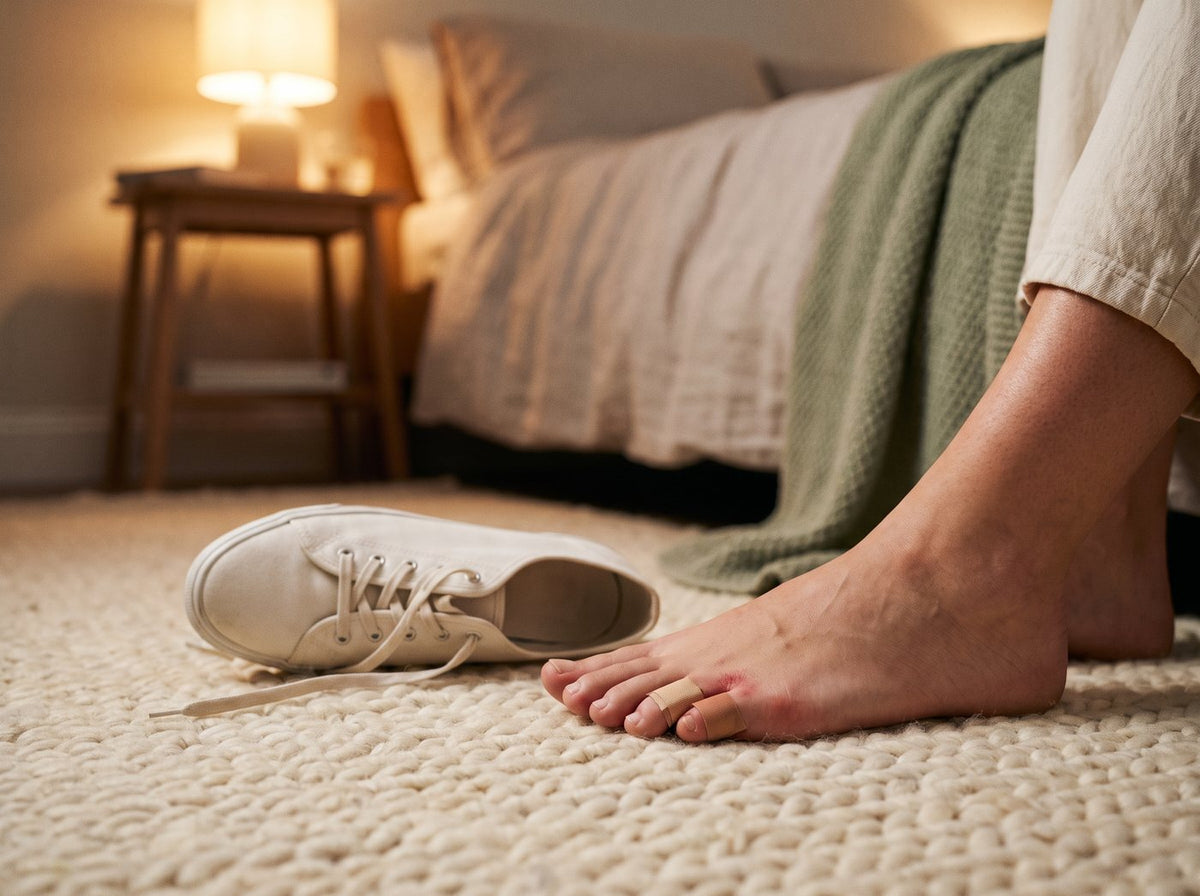
A bare foot with a bandage on the little toe next to a narrow white sneaker

Sign 1 of 7

Your pinky toe takes the hit.

Rubbing, redness or a hard spot on the outside of your little toe usually means one thing: the shoe is narrowest exactly where your foot is widest.

Most sneakers taper toward a point at the front, so the outer toes get squeezed first, step after step.

Try this

After a long day, look at the outside of your little toe. Red, rubbed or taped up? That’s the shoe pressing there.
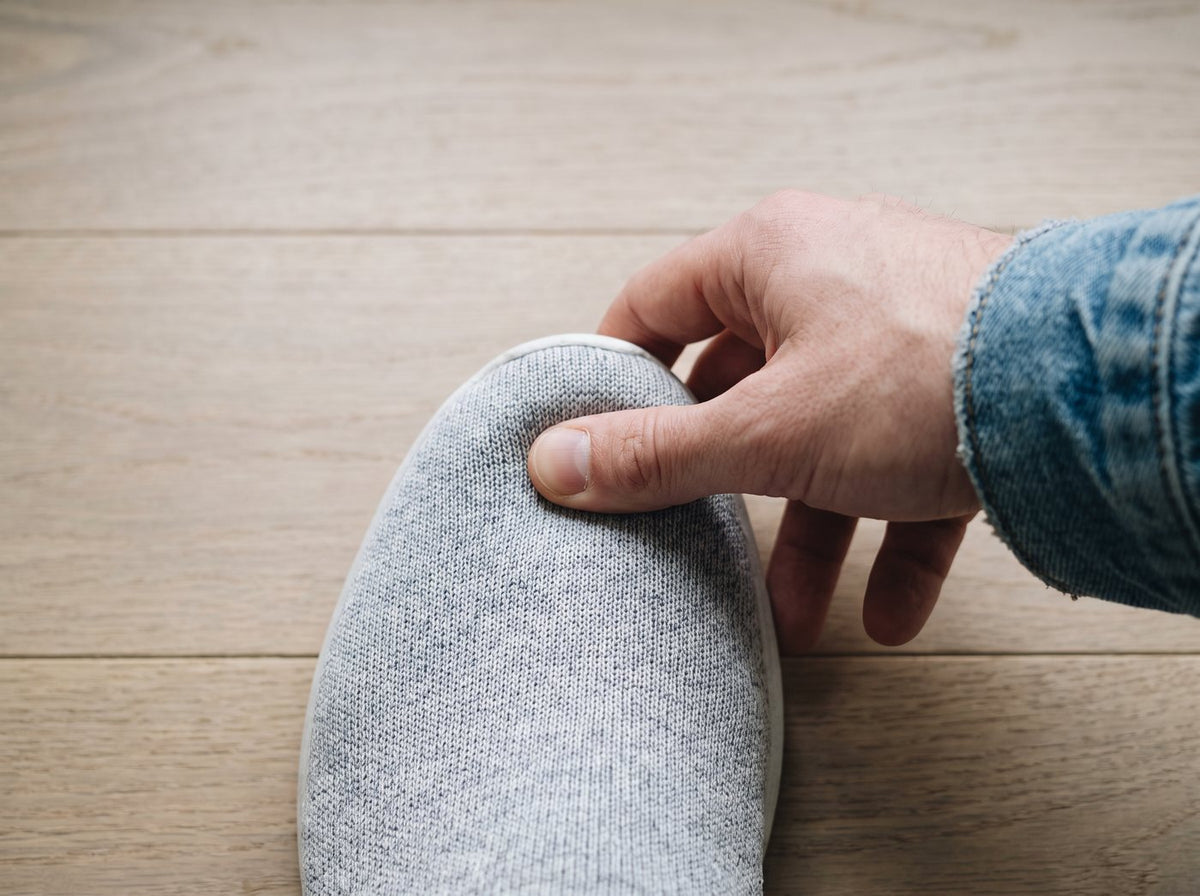
A thumb pressing on the toe of a knit sneaker to check the fit

Sign 2 of 7

Your toes can’t wiggle.

Stand up in your shoes and spread your toes. If they can’t move, or the upper stretches tight over them, there’s no room for your foot to do what it does when it carries your weight: spread out.

Toes that are pressed together all day are working against the shoe instead of with the ground.

Try this

The wiggle test. Stand, spread your toes, then press the front of the shoe with your thumb. You should feel space, not toes pushing out the sides.

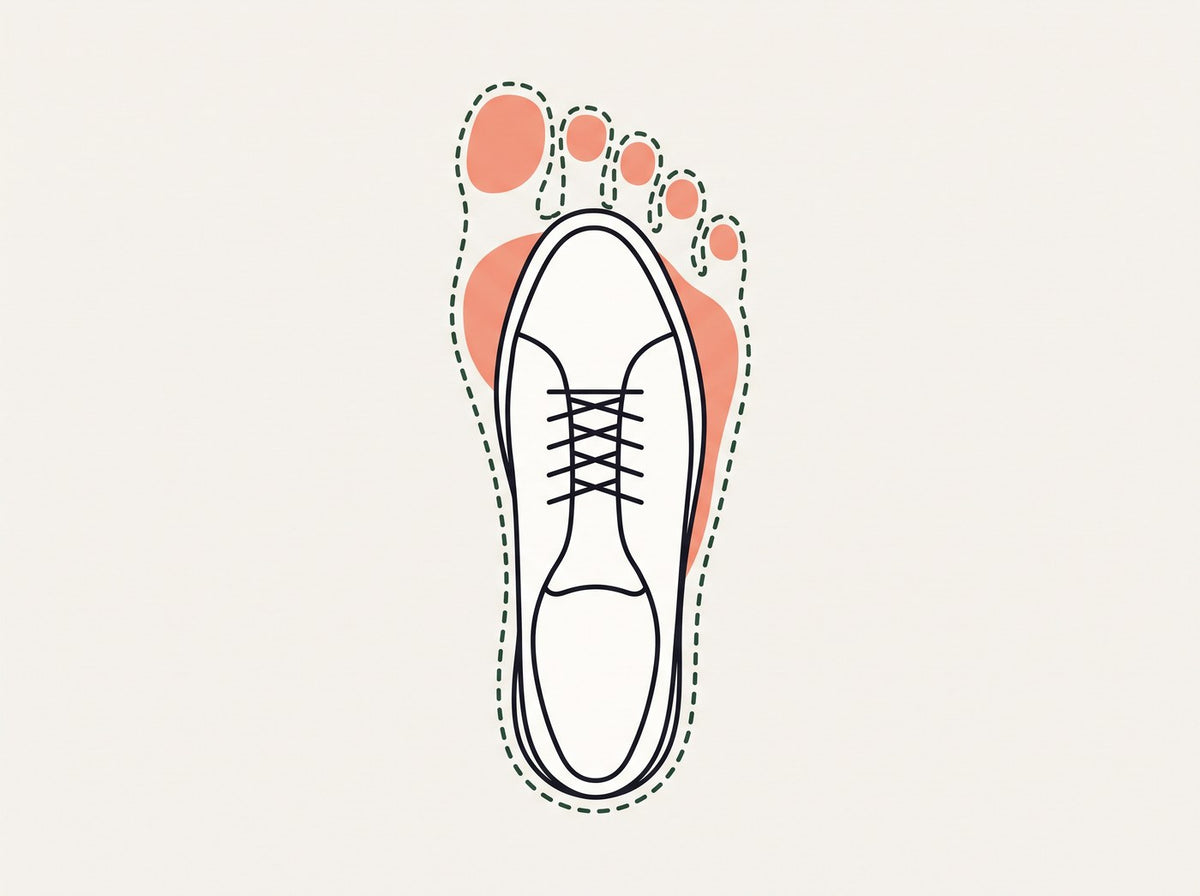
Diagram: the outline of a foot is wider than the outline of a typical sneaker placed on it; the toes and the sides of the ball of the foot stick out past the shoe

Sign 3 of 7

Your foot is wider than your shoe.

Shoes are sold by length. Width is an afterthought, and most sneaker walls offer one.

That’s why so many people are in the wrong shoe without knowing it. In a review of the research, 63–72% of people were wearing shoes that didn’t fit the width or length of their feet.1

Try this

The trace test. Stand on a sheet of paper and trace your bare foot. Set your everyday shoe on top. If the pencil line shows past the sides, your shoe is narrower than your foot.

“Your shoes should conform to the shape of your foot. Your feet should never conform to the shape of your shoes.”

Alyssa Dufour, Framingham Foot Study researcher5
A woman sitting on her bedroom floor looking at a pile of old shoes

Sign 4 of 7

Your feet changed. Your shoe size didn’t.

Feet tend to get wider with time. In one study of women, the ball of the foot widened about 3–4 mm per decade, while length stayed the same.3

Pregnancy changes feet too: in another study, 60–70% of women’s feet got longer and wider during pregnancy, and the change appeared to be permanent.4 Your shoes may still be the size you were years ago.

Try this

When did you last measure your feet? Measure both, standing up, at the end of the day, when feet are at their largest.

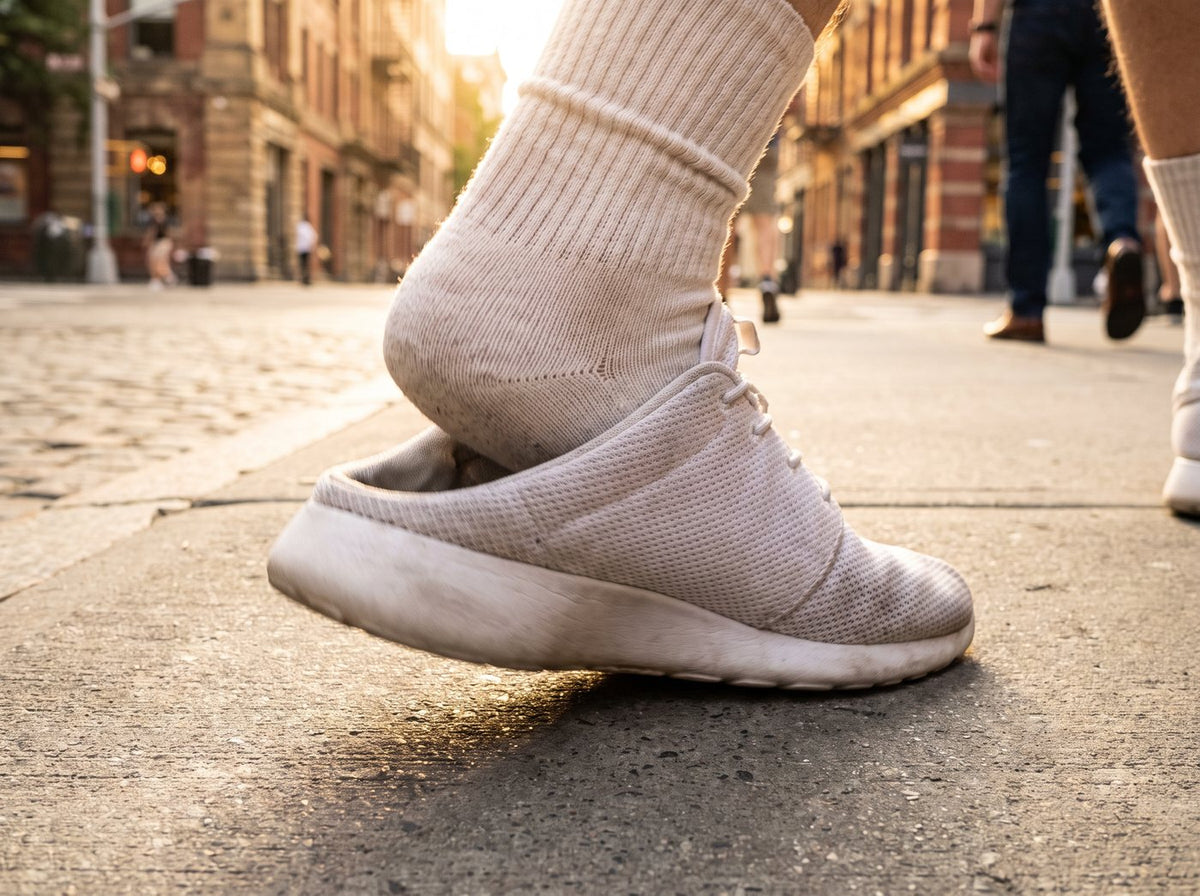
A heel lifting out of the back of a sneaker mid-step

Sign 5 of 7

You size up, and your heel slips.

Going up a size to get more width mostly gets you more length. Your toes get a little room, but your heel lifts out with every step and the shoe bends in the wrong place.

The fix is a shoe that’s wider at the front and snug at the heel, not one that’s longer.

Try this

Walk a few steps on a hard floor. If your heel lifts out of the back, or your toes slide forward, the shoe is too long for you.

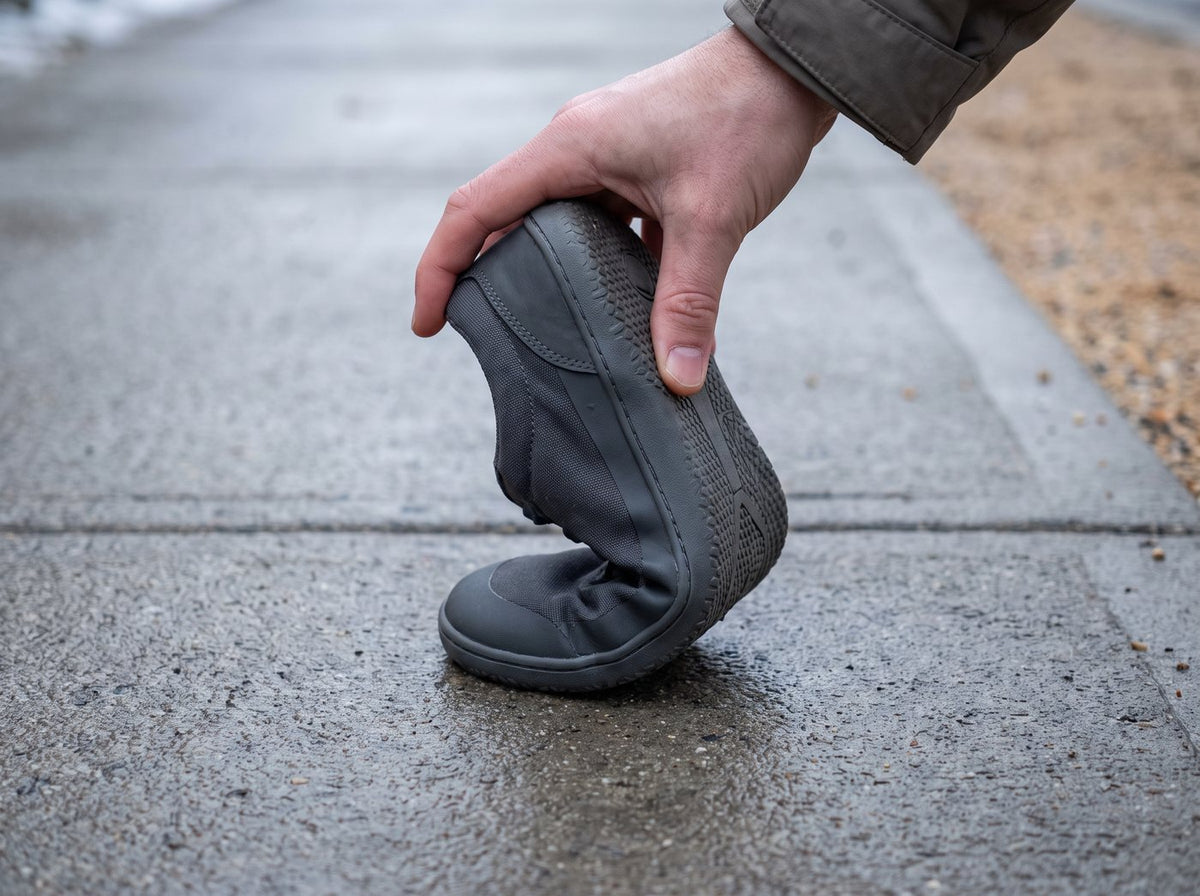
A thin barefoot-style shoe bent in half on a concrete sidewalk

Sign 6 of 7

Barefoot shoes freed your toes. Your heels disagreed.

Barefoot shoes got the shape right: a wide, foot-shaped toe box. Many of them also come with a sole that’s almost paper-thin.

On concrete, tile and long days, plenty of people find their toes feel great while their heels and the balls of their feet miss the cushion. You shouldn’t have to choose.

Try this

After a day on hard floors, notice where it aches. Happy toes but sore heels or forefoot means you need room and cushion together.

A nurse in scrubs resting her feet on a bench at the end of a shift

Sign 7 of 7

Your feet are done before your day is.

If your feet feel fine at 9 a.m. and are throbbing by 6, a tight toe box and a thin sole add up hour after hour, especially if you’re on your feet at work.

Feet that are squeezed all day have nowhere to go when they swell a little by evening.

Try this

Shoes off at the end of the day: are your toes pressed together or marked by the shoe? That’s the shoe, not your feet.

Your tally

0of 7

Tap the signs that sound like you.

Go back up and tap “This sounds like me” on any sign that fits. Or start with our everyday pair:

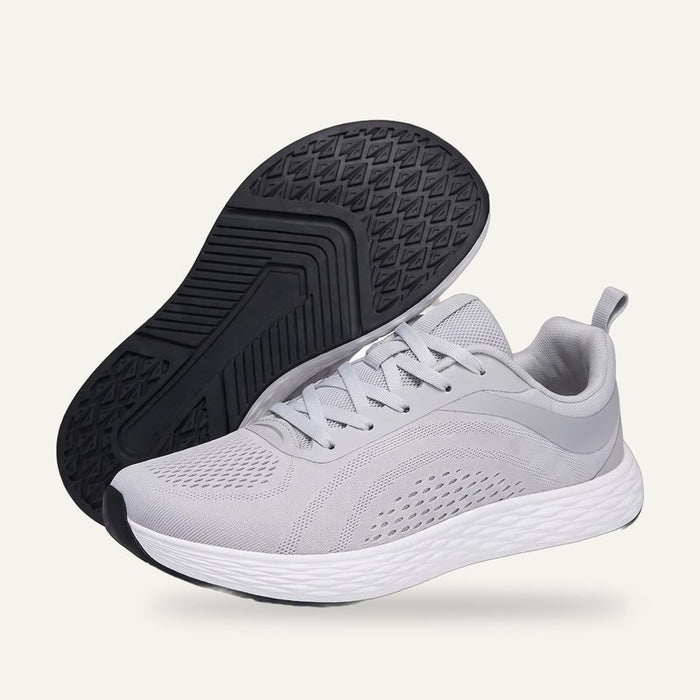
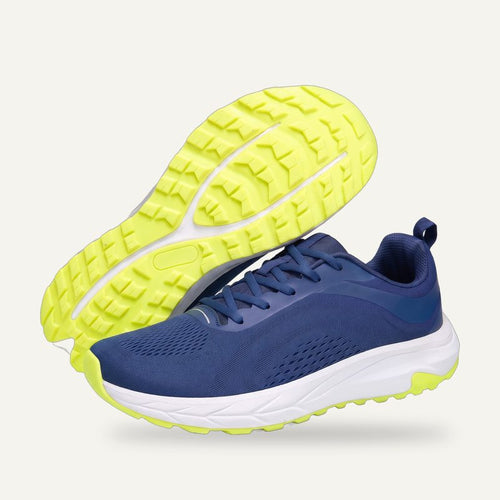
Daylong sneakers

Our everyday all-rounder

Daylong

A wide, rounded toe box, springy foam and certified grip, in six colors. The pair you reach for every day.

$69.956 colors · Free size exchanges

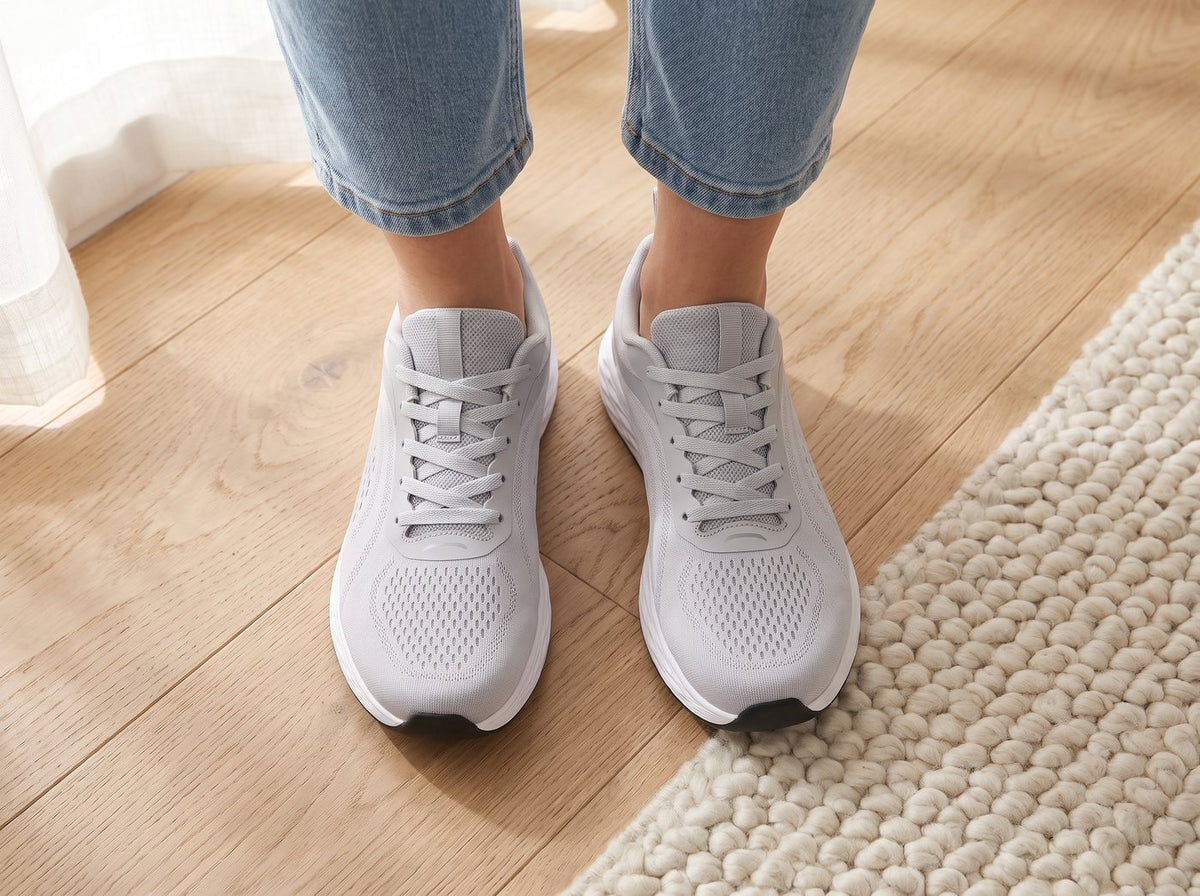
Looking down at feet in light gray Daylong sneakers with wide, rounded toe boxes

The fix

Room up front. Real cushion underneath.

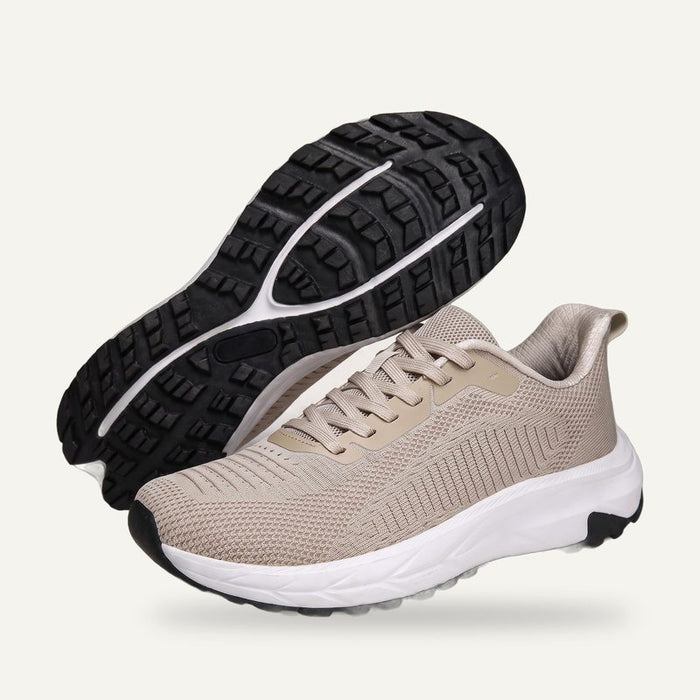
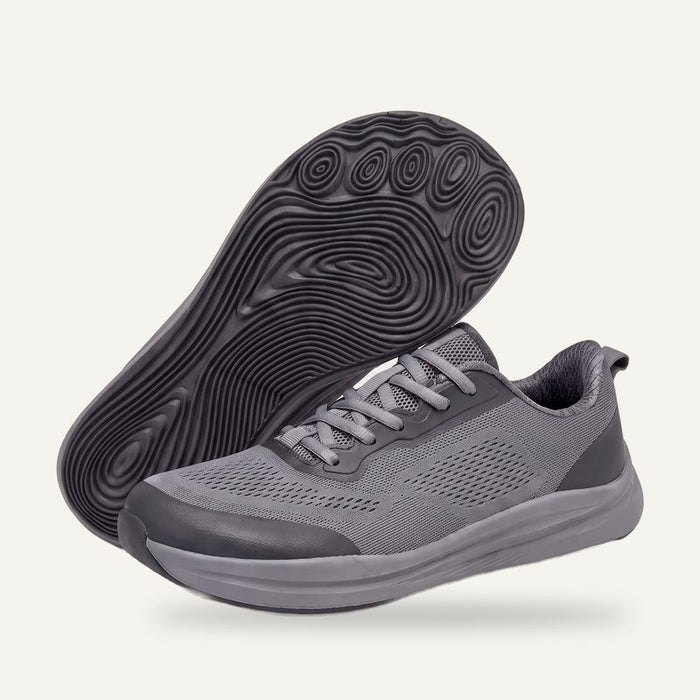
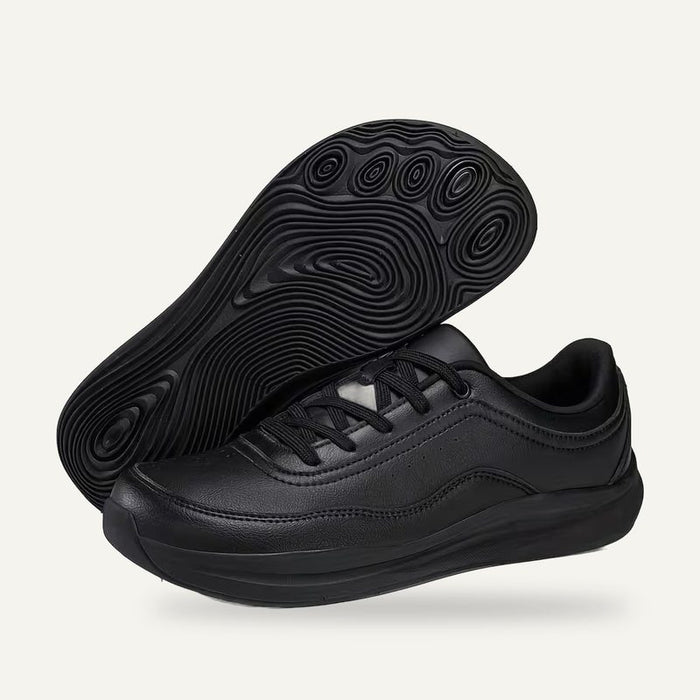
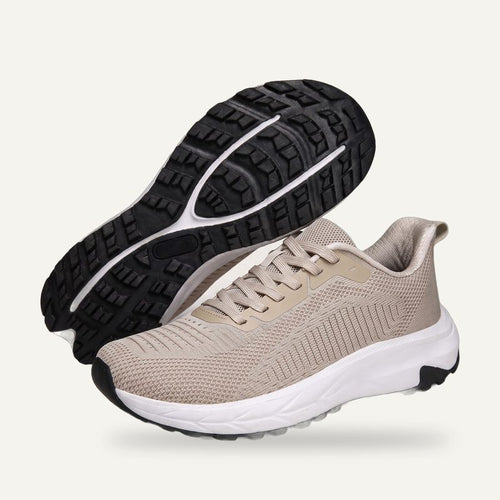
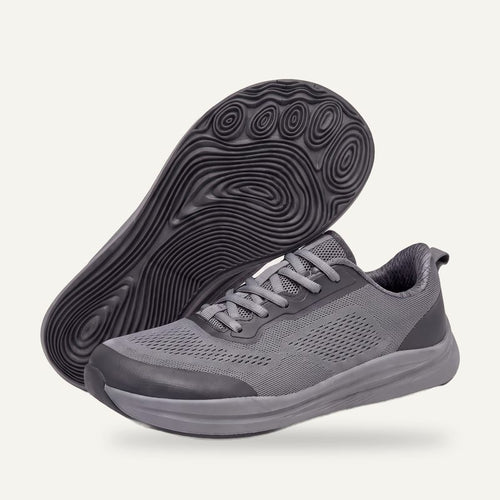
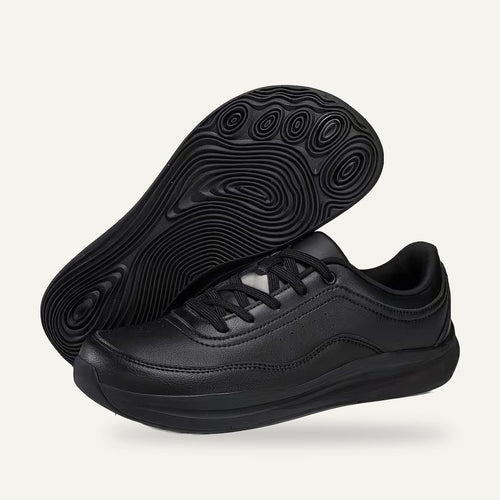
You don’t need a bigger shoe. You need one shaped like your foot. That’s the only kind we make: six pairs of sneakers, each with the same four things.

  • RoomA wide, rounded toe box

    Shaped like a foot, not a point, so your toes lie flat and spread out.

  • HoldSnug at the heel

    Width where you need it, a secure heel where you don’t. No sizing up.

  • CushionReal foam underneath

    Not a barefoot sole. Real cushion for concrete, tile and long days.

  • GripCertified slip-resistant

    Every outsole is tested and certified, for wet crosswalks and slick floors.

Find your pair

See the difference

Most shoes are shaped like a point. Feet aren’t.

Feet are widest across the toes, and most sneakers narrow right there. Every All Ten pair is built the other way around: wide and rounded at the front so your toes lie flat and spread out, and snug at the heel so your foot stays put.

Toes pushed together at the widest part of your foot

Room to spread at the front, snug at the heel

How it compares

The toe room of a barefoot shoe. The cushion of a sneaker.

All TenTypical sneakerBarefoot shoe
Wide, foot-shaped toe boxYesTapers at the toesYes
Real foam cushionYesYesThin by design
Certified slip-resistant outsoleYesNot usuallyNot usually
Looks like a regular sneakerYesYesOften not
Free size exchangesYesVariesVaries
30-day wear testYesVariesVaries

Typical sneaker and barefoot shoe columns describe common designs, not any one brand.

Walk in them for 30 days.

Wear them on real walks and real errands. If the fit isn't right, swap sizes for free. Every product page has a 30-second size finder to get it right the first time.

  • Free US shippingOn every order
  • Free size exchangesSwap sizes at no cost
  • 30-day wear testWalk in them first

Questions

Good to know.

Still wondering about something? Our team answers every message.

Not sure which pair?Tell us about your feet and your day, and we’ll point you to the right one.Message us
How do I know if I need a wide toe box?

Try the trace test and the wiggle test above. If the outline of your foot is wider than your shoe, or your toes can't spread inside it, a wide toe box will feel different from the first step.

Are All Ten shoes barefoot shoes?

No. They have the wide, foot-shaped toe box people love about barefoot shoes, with real foam cushion underneath and a certified slip-resistant outsole.

How do they fit?

Wide and rounded at the toes, snug at the heel. Sizes are unisex and every size shows the US women's and men's size. Each product page has a size finder: measure your foot, enter the length, and it picks your size.

What if they don't fit?

Wear them for up to 30 days. If the size isn't right, exchange it for free. Shipping in the US is free too.

Will they help with bunions or plantar fasciitis?

All Ten makes comfort sneakers, not medical devices, and we can't say they'll treat or prevent any condition. If you have a foot condition, ask your doctor or podiatrist what to look for in a shoe.

A woman walking down a tree-lined sidewalk in light gray Daylong sneakers

Your next pair

Give your toes the room.

Six pairs with a wide toe box, real cushion and certified grip. Free US shipping, free size exchanges and 30 days to walk in them.